

Tensions soared in the Carribean this week, with the US striking a Venezuelan vessel it claimed carried "massive amount of drugs" before deploying warships, fighter jets and thousands of troops in a crackdown on drug trafficking. Experts say Venezuelas role in the drug trade is smaller than claimed.
TheUnited Statesramped up its military presence in the Caribbean this week,sending fighter jets, warships and thousands of troops, sources speaking on condition of anonymity said, in a push against Venezuelandrug trafficking. The US accused PresidentNicolas Maduroof running a "narco state" and vowed to dismantle cartels it blames for fuelling Americas drug crisis.
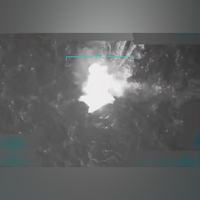
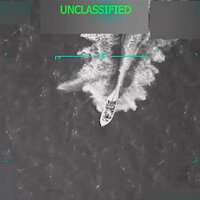
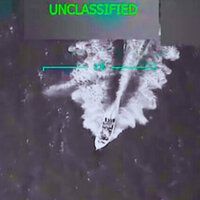
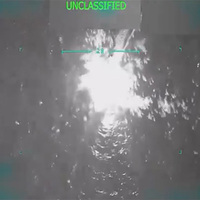
The operation has already proven deadly. On Tuesday, US forcesblew up a boatin the southern Caribbean, killing 11 people. Trump claimed it was carrying "massive amounts of drugs" and tied it toVenezuelas Tren de Aragua gang, which Washingtondesignated a terrorist organisationearlier this year.
Caracasrejectedthe claim, accusing Washington of fabricating evidence and suggesting the video US President Donald Trump shared of the strike was made with artificial intelligence.Interior Minister Diosdado Cabello condemned the strike, saying no allegation of drug trafficking can justify extrajudicial executions at sea.
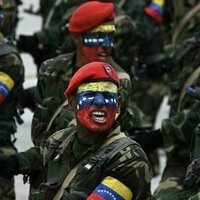
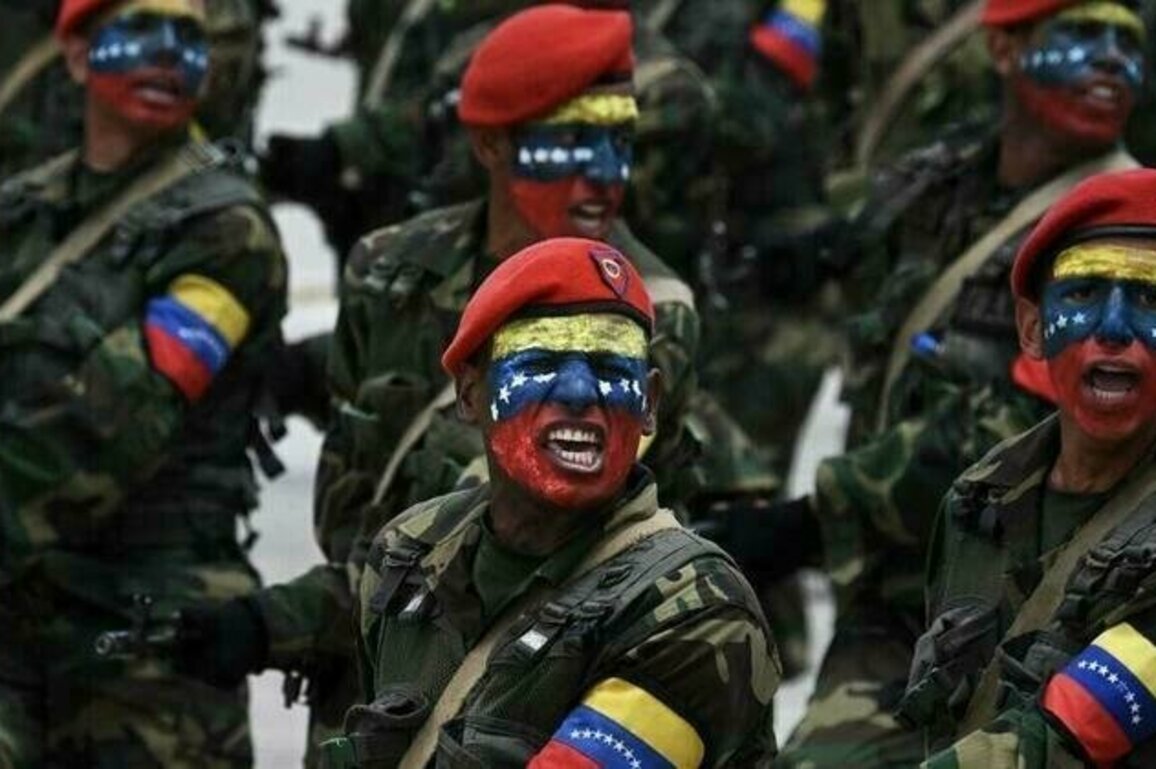
Earlier this week, at a rare press conference, Maduro denounced what he called "the greatest threat our continent has seen in the last 100 years" and warned Venezuela would enter "a period of armed struggle" if attacked. He has since ordered the mobilisation of the countrys military, which numbers around 340,000, and reservists, which he claims exceed eight million.
ThePentagonsaid two Venezuelan military planesflew near a US Navy vesselin international waters Thursday in a "highly provocative" move, marking a new escalation in the standoff.
Read moreVenezuelan military planes buzzed US ship in highly provocative move, Pentagon says
A transit point, not a producer
Despite Washingtons claims, Venezuela produces littlecocaineitself. Its long, porous border withColombiathe worlds largest supplierand access to Caribbean waters make it a transit point, but far from the main one.
"Venezuela is not a cocaine-producing country," said Thomas Posado, a lecturer in Contemporary Latin American Civilisation at Rouen University. "The main producers are Colombia andPeru. Venezuela serves more as a transit country, particularly for Colombian cocaine."
That role has waned in recent years. "These days, the primary transit country isEcuador," Posado explained, pointing to its Pacific ports likeGuayaquiland its location closer to production zones.
US estimatessuggestbetween 200 to 250 metric tons of cocaine pass through Venezuela annually. By comparison, some 1,400 tonsmoved through Guatemalain 2018 alone.
Disproportionate accusations
For analysts, Washingtons focus on Venezuela is above allpolitical."Trumps accusation is disproportionate to the actual role Venezuela plays," Posado said.
The contrast with Ecuador underscores the point, he added. "Ecuador is heavily infiltrated by narco-groups and has become a major exit point for cocaine going to the Pacific. But its president,Daniel Noboa, is a close ally ofDonald Trump. So there are no aggressive policies aimed at him."
Meanwhile, Venezuela is seen in Washington as "a hostile power and an ally ofRussiaandChinain the region".
In 2020, US prosecutorschargedMaduro and 14 associates with conspiring alongside Colombian armed groups to use cocaine as a weapon to flood the United States. While unproven in court, officials in Washington portray him as the head of the so-called "Cartel de los Soles" (Cartel of the Suns) a loose network of Venezuelan officers and politicians accused of profiting from smuggling, illegal mining and corrupt contracts.
Acccording to the US Treasury, the cartel takes its name from the sun-shaped insignia on Venezuelan officials uniforms and "supports Tren de Aragua in carrying out its objective of using the flood of illegal narcotics as a weapon against the US". Tren de Aragua is involved in extortion, murder, drug and human trafficking across Latin America.
Posado said the label is misleading. "In my view, its not a real cartel in the traditional sense like Medelln [Editors note: a powerful and highly organizedColombiandrug cartel that was founded and led byPablo Escobar]. The Cartel de los Soles is more of a political construct used by some US figures. Calling it a centralised cartel is exaggerated."
'A geopolitical manoeuvre'
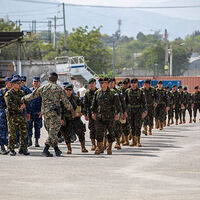
Washington has so far deployed seven warships, a nuclear-powered submarine, more than 4,500 Marines andnow 10 F-35 fighter jetsto a Puerto Rico airfield toconduct operations against drug cartels in the region.
Read moreUS deploys fighter jets to Puerto Rico to combat drug cartels amid tensions with Venezuela
But US drug agency datashowmost cocaine bound for America now travels through the Pacific, not the Caribbean. In 2019, three-quarters of shipments took the Pacific route, compared to a quarter through the Caribbean.
For Posado, this confirms that the campaign is "much more of a geopolitical manoeuvrethan a real anti-narcotics strategy. If this were a genuine campaign, it would require cooperation withMexico, Colombia and Ecuador."
"By targeting Venezuela, which is neither a major producer nor a key transit country, the US is cutting itself off from crucial partners and reviving the old spectre of US interventionism in the Caribbean," he added.
Analysts say the military build-up is as much about domestic politics as international strategy. Florida SenatorMarco Rubio, a close Trump ally, has pushed for regime change in Venezuela and praised the strikes, while others in Trumps circle have favoured negotiations.
"This is less of a counter-narcotics operation, more of a show of strength," Posado concluded.
Originally published on France24