

Richard M. Sanders
Download PDF
Sep 2 2025
0
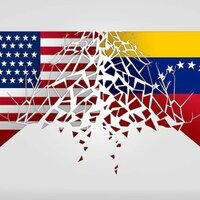
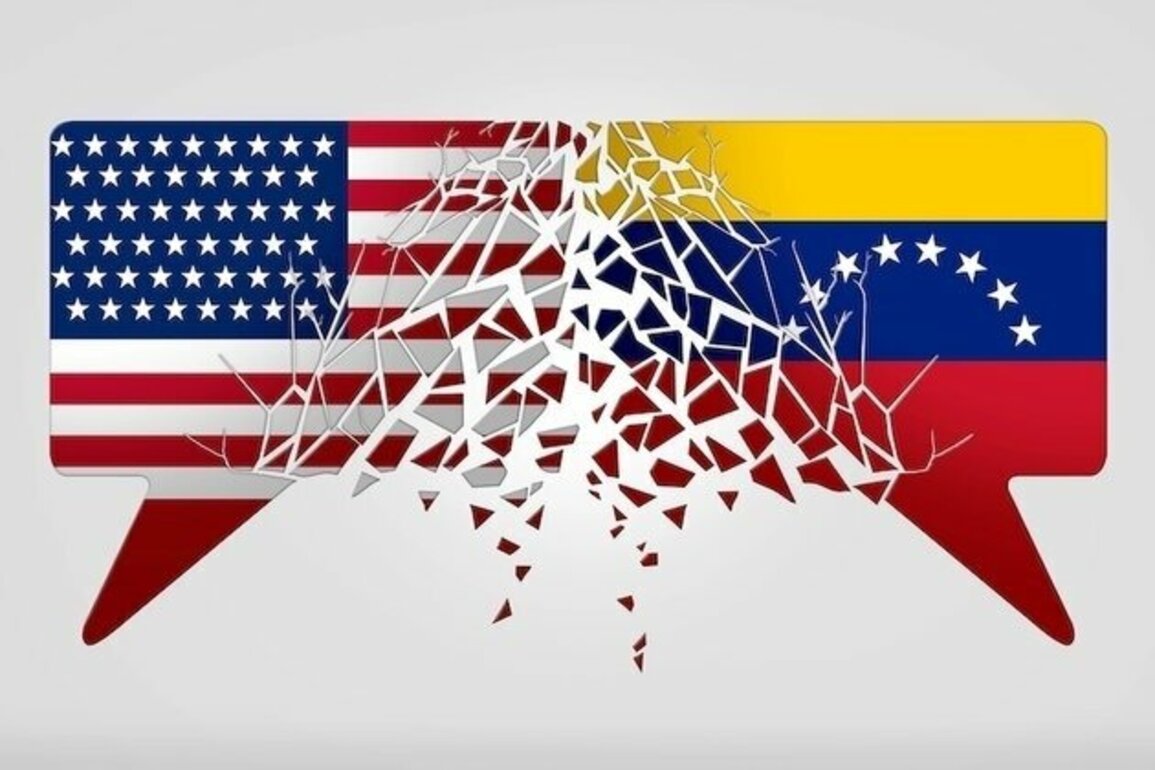
viewslightsource/DepositphotosThe United States has assembled a powerful naval armada in the Caribbean with the professed aim of combating narcotics trafficking.But with three destroyers and a cruiser, all missile equipped, and an attack submarine, together with the amphibious assault ship Iwo Jima and its 2200 marines, thisforcescapabilities far exceed routine interception of drug shipments, raising the specter of the use of military force against Venezuela. Its presence follows President Trumps decision to direct the U.S.militaryto prepare options for action against Latin American drug traffickers and the designationof the so-called Cartel of the Suns as a Foreign Terrorist Organization under U.S. law.This term is used as a catch-all phrase used to describe the involvement in narcotics trafficking of senior Venezuelan military officials up to their commander-in-chief, President Nicols Maduro (Suns are used by the Venezuelan army on its uniforms to indicate general officer rank.)
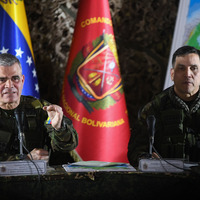
There is ample reason to conclude that Venezuelan authorities have long been deeply implicated in a range ofcriminal activity, most notably the narcotics trade both in their own country and next door in Colombia where coca is grown and refined into cocaine by drug trafficking organizations with the participation of guerrilla groups that have made Venezuelan territory a safe haven. With its ships in place and its legal authorities invoked, what is the Trump administration planning to do?Maduro has told the world that an invasion is planned, and has mobilized Venezuelas military, although after years of politicization and corruption, it is not exactly a force to be reckoned with.
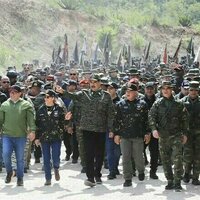
That said, if regime change is the goal, it will require more than 2200 marines.Venezuela is twice the size of Iraq where the United States committed 150,000 ground troops to its invasion force in 2003. 27,000 troops participated in the 1989 intervention in far smaller Panama. So the marines on the Iwo Jima would be at the most the spearhead of a much larger effort. Even if Venezuelas armed forces were to surrender quickly, a prolonged occupation would be required while a new government and security forces are stood up.The regime, in power for twenty-six years now, has devoted extensive efforts to organizingmilitiasin the vast slums of Caracas which could cause considerable chaos and would need to be suppressed.Thus, despite his tough talk and the presence of the marines offshore, it seems unlikely that Trump, with his pronounced aversion to boots on the ground, has this in mind.
What other options are available to the force sailing in the Caribbean?Perhaps the aim is to seize Maduro and other senior figures and bring them to trial (as was done with Panamas Manuel Noriega) or to kill them (as was done with Osama bin Laden).Success, of course, would not be guaranteed, and in any event, there are plenty of other figures, equally brutal and corrupt, from the regimes cadres who would be able to take take their places.
An alternative might be to attack known narcotics trafficking installations either in Venezuela or Colombia with missiles or drones fired from the vessels.But even if some labs are destroyed or some kingpins killed (tactics long used in counter-narcotics operations), their impact on this vast illegal industry would be minimal. Perhaps the administration is considering interdicting Venezuelas oil tankers to starve its economy or attacking a few of its military bases in the hope it will frighten Maduro and his associates into fleeing into exile perhaps to Moscow where they can live near former Syrian dictatorBashir al-Assad.
This would raise the question of what to do next should such escalation fail to work. Or it may be the presence of the ships and the marines is just a bluff, and that after some highly publicized narcotics seizures, they will be quietly reassigned to other hot spots such as the Taiwan Strait or the Persian Gulf.This ultimately may be a far better outcome than some ill-advised intervention in Venezuela.
Venezuela once appeared to be a major headache for the United States.After winning the Presidency in 1999, Hugo Chvez used his countrys oil wealth to support Cuba and Nicaragua, the regions other hardcore leftist regimes, while buying friends among the small island states of the Caribbean.He even created his own international bloc theBolivarian Alliance of the Americas(Spanish initials ALBA) to challenge the United States in the Western Hemisphere. His free-spending policies at home bought initial popularity.But the combination of economic mismanagement and massive corruption have turned Venezuelas people against the regime, forcing Chvez, and, after his death in 2013, his successor Nicols Maduro, to take ever more authoritarian measures, includingelectoral fraud, to stay in power.
This has been a tragedy for the Venezuelan people.But few in Latin America view Venezuela as any kind of model now.Its crippled oil sector no longer provides the economic muscle for the regime to project its power outside its borders, leaving ALBA to exist largely on paper.Thus, while Venezuela may indeed be thoroughly enmeshed in the narcotics trade, it does not constitute a threat to U.S. national security which would justify the use of the force which lies off of its shores.
Further Reading on E-International Relations
- Opinion The Survival of Venezuelas Bolivarian Revolution
- Opinion Venezuelas Migrants and the Challenges of Trinidad and Tobago
- Disputing Venezuelas Disputes
- US-Venezuela Relations in Light of the July Election
- China-Venezuela Relations in the Context of Covid-19
- Venezuela: A Difficult Puzzle to Solve
About The Author(s)
Richard M. Sandersis Senior Fellow, Western Hemisphere at the Center for the National Interest. He is a former member of the Senior Foreign Service of the U.S. Department of State, where he served at embassies throughout Latin America, including Venezuela, and in positions in Washington dealing with the region.
TagsDonald TrumpVenezuela