

As the marine biodiversity treaty’s anticipated entry into force draws near, at the forefront of discussions today was the mechanism by which information about treaty-related activities will be shared amongst States, with delegates debating the optimal size, composition and working methods for the informal group of experts that will be tasked with its operationalization.
Delegates are meeting in a format formally known as the “Preparatory Commission for the Entry into Force of the Agreement under the United Nations Convention on the Law of the Sea on the Conservation and Sustainable Use of Marine Biological Diversity of Areas beyond National Jurisdiction and the Convening of the First Meeting of the Conference of the Parties to the Agreement”, taking place at UN Headquarters from 18 to 29 August.
This second of its three planned sessions will build on the first session’s work that took place from 14 to 25 April by addressing a series of issues in the format of informal working groups. (Coverage to date is available here.)
The Agreement under the United Nations Convention on the Law of the Sea on the Conservation and Sustainable Use of Marine Biological Diversity of Areas beyond National Jurisdiction was adopted on 19 June 2023 and is open for signature until 20 September 2025. Currently, only eight more instruments of ratification, approval, acceptance or accession thereto are needed to meet the 60 required for the treaty to enter into force.
Delegates Discuss Agreement’s Clearing-House Mechanism
Under the Agreement, a Clearing-House Mechanism is to be established to serve as a centralized, open-access platform to enable parties to access, provide and disseminate information with respect to treaty activities. Aiding today’s discussion were draft terms of reference prepared by the Commission’s Co-Chairs on the creation of an informal group of experts dedicated to operationalizing that Mechanism (document A/AC.296/2025/15).
“There is perhaps no more urgent piece of work that is in front of us than this one,” underscored Commission Co-Chair Adam McCarthy (Australia) at the meeting’s outset. Given the current rate of ratification, “we might need a form of Clearing-House Mechanism in operation sometime in early 2026”, he pointed out, encouraging delegates to work towards having the informal expert group “up and running” to start its work by September.
Mexico’s representative, speaking for the Core Latin American Group, echoed that appeal and urged flexibility from all delegations to “achieve practical consensus” towards establishing that group during this session of the Preparatory Commission. “This Mechanism is crucial for the implementation of the [Agreement],” he stressed. He advocated for a limited group of 25 experts, nominated by States and appointed by respective UN regional groups. The group, in its initial phase, should benchmark existing mechanisms and collaborate with the relevant experts associated with them.
The representative of the Bahamas, speaking for the Caribbean Community (CARICOM), meanwhile, voiced support for a phased approach to the operationalization of the Mechanism. She emphasized the importance of ensuring that the Mechanism “is operational when it should be, without compromising on its effectiveness”. She went on to say that a limited membership for the informal expert group would allow for greater efficiency, adding that — “while we feel that 50 members may be too large” — her group is open to proposals, as long as there is consideration for equitable geographic representation, gender balance and representation for small island developing States.
Iceland’s representative, also voicing concern that 50 would be too large a membership, nevertheless recognized the importance of representation. He therefore voiced support for the current formulation that would require a maximum, but no minimum. The speaker for Oman, noting that the proposed number of experts is “large”, underscored that biodiversity differs from one region to another. Thus, it is important to allocate or determine the resources needed “for the experts to allow them to fulfil their tasks” in light of this complexity, he said.
Iran’s representative said that, to ensure inclusivity, “it is prudent not to limit the number of States that could take part in the informal [expert] group”, further noting that “the complexity and diversity of this important Mechanism could not be fulfilled with a limited number of experts”. Similarly, Türkiye’s representative said: “Limiting participation to only a small number of experts would restrict perspectives and knowledge-sharing, whereas broad participation fosters collaboration, innovation and transparency.”
Other delegations echoed support for an open-ended expert group, while providing recommendations for its working methods. Thailand’s delegate suggested that the group be allowed to work via email — especially in the early stages — to allow for convenience and account for differing time zones. She also noted that limiting the number of group members will require a nomination and selection process and other administrative processes, which will delay the commencement of the group’s work — a point later echoed by Indonesia’s representative.
Samoa’s delegate, speaking for the Alliance of Small Island States, emphasized that the road map for phased operationalization of the Mechanism should include detailed information on the resource requirements for implementation and identify specific priorities for its first phase. Voicing support for a flexible, limited membership in the informal expert group, he stressed that experts from least developed countries, small island developing States and least developed countries must be included. Further, the group should be able to convene smaller technical sub-groups on specific issues, including on Indigenous Peoples, local communities, civil society, the scientific community and the private sector, he added.
On that note, Vanuatu’s representative, speaking for the Pacific small island developing States, underscored that “only Indigenous Peoples can nominate Indigenous representatives”. Therefore, with respect to the informal expert group’s composition, Indigenous representatives should have their own separate allocation, distinct from that for local communities. The Pacific region has unique characteristics that are vital to consider at the foundational level of the Clearing-House Mechanism, she stressed — including firsthand experience in managing traditional knowledge, cultural sensitivity and connectivity challenges.
“Indigenous Peoples are rightsholders with their own distinct status, rather than merely stakeholders,” echoed the speaker for the Federated States of Micronesia. The representative of the European Union, in its capacity as observer, also expressed support for the engagement of experts from least developed countries, landlocked developing countries and small island developing States, as well as for the representation of Indigenous Peoples and local communities in the informal expert group.
Several delegations also elaborated on elements missing from the draft terms of reference prepared by the Co-Chairs. Senegal’s delegate, speaking for the African Group, said that elements from the Group’s statement during the Commission’s first session “were not fully incorporated” — an omission that may affect the inclusivity and functionality of the Clearing-House Mechanism. He emphasized the “urgent need to address digital inequities that constrain participation by developing countries — particularly in Africa”. He further advocated for multilingual accessibility as a core design feature to ensure usability across diverse linguistic contexts.
On that note, the speaker for Bangladesh recommended early provisional operationalization of the Clearing-House Mechanism through a pilot phase, with an explicit focus on multilingual inclusivity and access for low-bandwidth and offline users. Lebanon’s delegate echoed that view later in the meeting, adding that internationally recognized data-sharing standards will help guarantee interoperability with existing platforms. The speaker for Sri Lanka requested consideration for a provision to make uploaded information available directly, in real-time, for parties. She also supported a proposal to upload pre-recorded videos explaining how to use the Mechanism in order to make it more user-friendly.
Meanwhile, other delegations pointed to entities whose inclusion in this process should be ensured. Maldives representative proposed that the Co-Chairs’ draft terms of reference explicitly provide for the inclusion of regional fishery bodies in the informal expert group, emphasizing that they “generate a significant volume of high-quality, policy-relevant data sets directly applicable to monitoring environmental-impact assessments and area-based management tools”. Drawing on their data architecture, confidentiality protocols and data-sharing arrangements would ensure that the Clearing-House Mechanism is interoperable with those existing systems, avoid duplication or unnecessary rehosting of data and respect established confidentiality rules, he underscored.
For his part, Canada’s delegate highlighted that “a key element missing in the draft terms of reference is a clear process and timeline for nominating and selecting experts”. Noting the narrowing timeframe, he stressed: “To ensure this tight timeline can be met, we recommend establishing a clear nomination and selection process without delay and to include these timelines in the [draft] terms of reference.” This, he said, would increase the likelihood of completing this necessary work in time.
Commission Also Takes Up Arrangements for Agreement’s Secretariat, Including Seat
In the afternoon, the Commission deliberated on the arrangements for the functioning of the Agreement’s secretariat, with countries vying to host its seat also taking the floor to make their case.
Gabriel Boric, President of Chile, speaking via prerecorded video, said that his country has the experience and reliability to host a UN headquarters and provide all the guarantees that this entails. “Valparaíso, like a lighthouse facing the Pacific coast, could become the first headquarters in Latin America for an agreement with universal membership under the United Nations,” he said. Adding that such a headquarters “means more than just a building”, he said that it would promote representation and inclusion in the UN system — especially from the Global South.
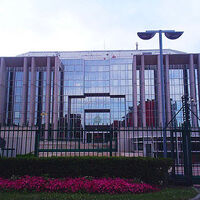
Belgium’s delegate also presented her country’s vision for hosting the secretariat as a “bridge-builder and catalyst for equitable ocean governance”, citing Belgium’s scientific leadership as host of the World Register of Marine Species and founder of the Blue Leaders alliance. She proposed Belgium “serving as a host for collaboration” in a truly global foundation. “Our approach of listening to all stakeholders first and speaking second has guided our campaign from the beginning,” she stressed, to “reflect the collective aspiration of all parties”.
The Preparatory Commission will continue its work tomorrow, 21 August, to continue its discussion on the Clearing-House Mechanism, as well as on the rules of procedure for subsidiary bodies established under the Agreement.