

Hyeran Jo and Nathalie Mndez
Download PDF
Aug 1 2025
1
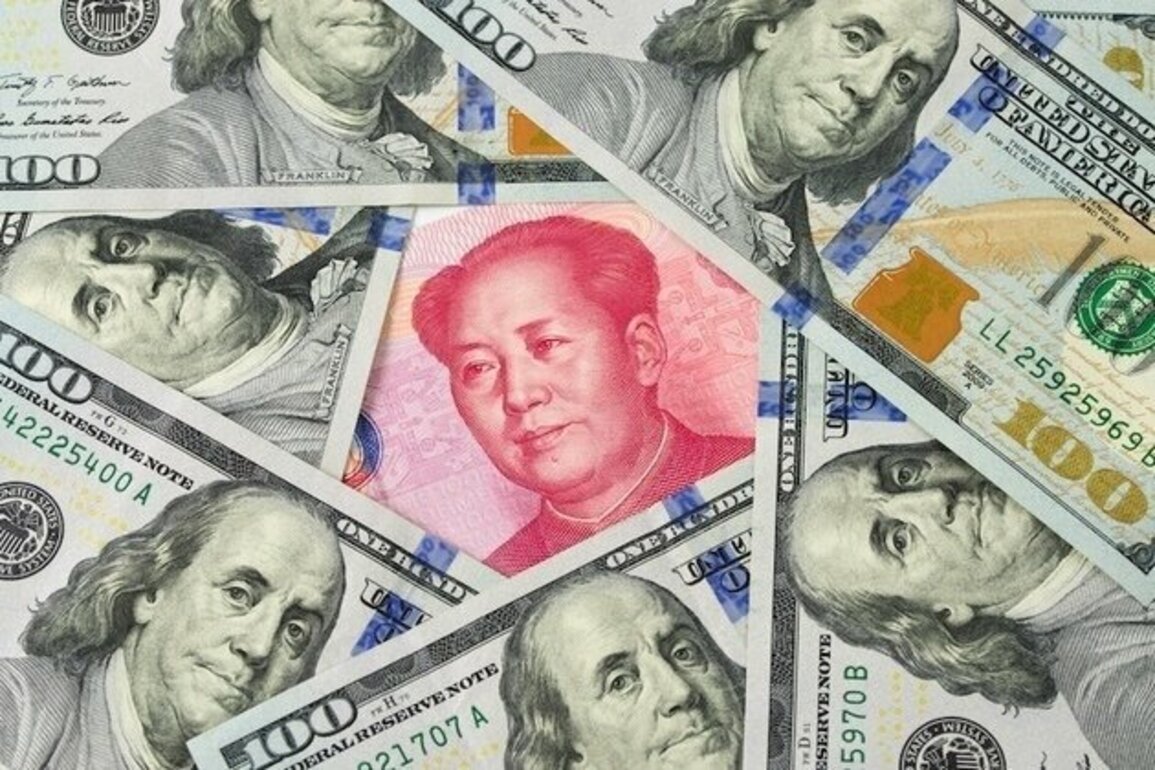
viewsshirotie/DepositphotosThe BRICS meeting in Rio on July 6th and 7th gives a snapshot of the great power competition between China and the United States in different regions around the world, including Latin America. China has become the largest trading partner for many countries in Latin America, investing heavily in infrastructure and forging political alliances that further its strategic objectives. For its part, the Trump Administration of the United States issued the statement that those participating countries will faceincreased tariffs. The statement was the continuation of exercise andassertion of its authorityfor the past and present century.
The positioning of various BRICS members and participating countries is particularly telling of what the great power competition means in the region and also globally. Brazils Lula hosted the meetingaiming to showcaseits foreign policy leadership,not necessarily antagonizingthe West. Russia is still going through the war in Ukraine, and Putin attendedonly online. Indias Modi was present as well as Ramaphosa from South Africa.No showof Xi Jinping was notable, although Premier Li Qiang was attending. Besides the BRICS core, other countries also showed promotion of their interests. Iran, for one, joined the group in 2024 and sent aministerial level delegationto rebuke recent strikes on Iran.
As the United States appears to be pulling back from its traditional leadership role in the world, China is seizing the opportunity to expand its influence and reshape global dynamics. Through a combination of state-driven development policies and active international engagement, Beijing has positioned itself as a major player in the Global South, extending its reach beyond Asia to regions such as Africa and Latin America. Chinas increasing presence in the region has been mainly driven by the Belt and Road Initiative (BRI) and a surge in trade volumes, marking amajor shiftin the regions economic landscape. Many experts point to Chinas use of infrastructure diplomacyfinancing ambitious, strategic infrastructure projects across the regionas akey factorin this rise.
The numbers tell a compelling story. Trade data from theWorld Bank(Figure 1) shows that in the past ten years, China has overtaken the United States as theleading trading partnerfor much of the region, upending a dynamic that had held steady since the early 2000s. Beyond trade, Chinas influence deepens through the 22 countries in Latin America and the Caribbean that have joined theBelt and Road Initiative.Chinese loanshave poured in, funding major energy, infrastructure, and development projects that have reshaped local economies. Chinas push isnt just economicits political too. Beijing has taken steps tostrengthen cultural ties,increase academic exchangesand boost tourism in Latin America, includingwaiving visa requirementsfor travelers from some countries. This multi-faceted approach highlights Chinas pragmatic mix of economic self-interest and strategic diplomacy as it works to secure resources, expand markets, and bolster its global standing.
On the other hand, the United States has long been a strategic ally and key trading partner for Latin America. Agencies likeUSAIDhave funneled millions of dollars into economic and military initiatives across the region. With the recent changes in theaid policy,immigration policy, andtariff policy, Washingtons recalibration of its foreign policy are transforming the geopolitical balance in Latin America and the Caribbean. As both powers deploy their strategies from deepening economic ties to defending national interests the decisions of Latin American states remain critical in shaping their alignments with global powers. The ultimate outcome is still up in the air, but one thing is clear: power in the region is actively being renegotiated.
The diverging approaches from China and the US have set the stage for a broader reconfiguration of power in Latin America and the Caribbean. Yet, its essential to recognize that each countrys internal decisions and policies also play a critical role in shaping this shifting landscape. Colombia provides a case in point. Historically, it has maintained closediplomatic tieswith the United States while keeping China at arms length. Unlike countries like Brazil, Argentina, and Peru, Colombia has received relativelylittle Chinese infrastructure investment. However, with the election of president Gustavo Petrothe first left-wing president in the countrys historyColombia has taken decisive steps to strengthen its relationship with China, presenting newchallengesfor the United States to maintain its strategic foothold in the country. We observe both on political and economic dimensions that the changes in Chinas strategy, coupled with Colombias domestic policies, have reduced the countrys dependence on the US while increasing its desire to integrate with China.
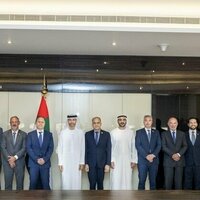
Politically, Colombia and the United States have long enjoyed astrong diplomatic relationship, as reflected in their shared memberships in international organizations, high-level dialogues, and multiplebilateral agreements. However,diplomatic tensionshave emerged in recent years.Disputesbetween the two leaders, the change of course of USAID, and a significant drop in new bilateral agreements over the past four years have contributed to a shift in this traditionally stable partnership. Against this backdrop, diplomatic ties between China and Colombia have strengthened. In 2023 alone, both countriessigned 12 cooperation agreementsin trade, technology, and economic development, upgraded their relationship to a strategic partnership, andColombias entry into the Belt and Road Initiativeduring recent China CELAC Forum in May. Colombia also joined the BRICS New Development Bank a few weeks after that Forum.
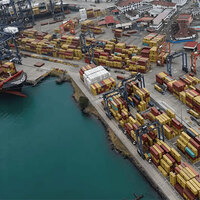
Economically, theUS has traditionally been Colombias largest trading partner, backed by a free trade agreement and significant investment. Yet, in recent years, the share of US trade has steadily declined, while Chinas footprint has grown (see figure 1). Although theres no formal trade agreement, ties have strengthened during the current administration, including the opening of aBuenaventura-Shanghai trade routein 2025. Additionally, Chinas infrastructural diplomacy has significantly grown:over 100 Chinese companies now operate in Colombia, andmajor infrastructure projectslike Bogots Metro Line 1 and the Regiotram are underway, along with investments in mobility, technology, and health.
Latin America, and Colombia in particular, finds itself at the center of a geopolitical tug-of-war with Chinas calculated investments and the USs shifting policies. While Beijing leverages trade, infrastructure, and cultural diplomacy to expand its influence, Washingtons recalibration of its foreign policy leaves room for new alliances and opportunities. Our analysis shows that power reconfiguration is not merely a product of external rivalry. It is driven by the choices each Latin American nation makes. As Colombias case demonstrates, the regions destiny hinges not just on global superpowers, but on its own internal political decisions and developments. The coming years will test how Latin America navigates these shifting currents.
Figure 1: China vs. US Import and Export Trends
Drawn by the authors using data from the World Bank.
Further Reading on E-International Relations
- Opinion US Policies towards Latin America: What to Expect from the November Elections
- China-Latin America Cooperation: An Alternative for Autonomy and Development?
- Monroe Reinterpreted: Trump 2.0s Contemporary Approach to Latin America
- A Tale of Two Attitudes Toward Leftist Governments in Latin America
- Powering the Future: Latin Americas Geopolitical Role in the Global Energy Transition
- The Killers Kindness: Gang Humanitarianism in Latin America
About The Author(s)
Hyeran Jois Associate Professor, Director of Graduate Studies and EDGES Fellow (20242027) at Texas A&M University. She studies international institutions, international law, and international political economy. Her research deals with the working of international organizations, the design of international rules and agreements, and the question of compliance with international law by non-state actors. She teaches courses in international relations and research design.
Nathalie Mendezis Associate Professor and chair of the masters in public management at School of Government Alberto Lleras Camargo at Universidad de los Andes, Colombia. Her main areas of research are Public Management, Collaborative Governance, Leadership, Latin American Politics, Decentralization and Public Administration. She uses mixed methods research design strategies including qualitative and quantitative techniques to conduct research and private and public interventions.
TagsBRICsColombiaLatin America